
Scott County Court Records After a Jail Arrest
A Scott County arrest creates a jail booking record first. The booking side is handled by the Scott County Sheriff's Office and the Scott County Security Center. The court side begins when the Scott County Prosecutor's Office files criminal charges in Scott Circuit Court or Scott Superior Court. Indiana uses the term prosecuting attorney rather than district attorney, and the local prosecutor identified in the research is Chris A. Owens.
For custody details, booking number, booking date, mugshot, arresting agency, and roster charge labels, use jail inmate records. For booking photos, use jail mugshots. Court records after an arrest are different: they show filed charges, hearings, orders, dispositions, financial entries, and some documents when public access allows them.
How to Find Scott County Court Records After an Arrest
Indiana MyCase is the statewide public court case search for most Odyssey courts. MyCase is free for public, non-confidential case information, but it is not the official certified court record. The Judicial Branch help material says official records must come from the court that maintains the record, and some public documents may not be available online even when the case is visible.
The Indiana MyCase public court search is the primary online route for Scott County court records after a jail arrest.
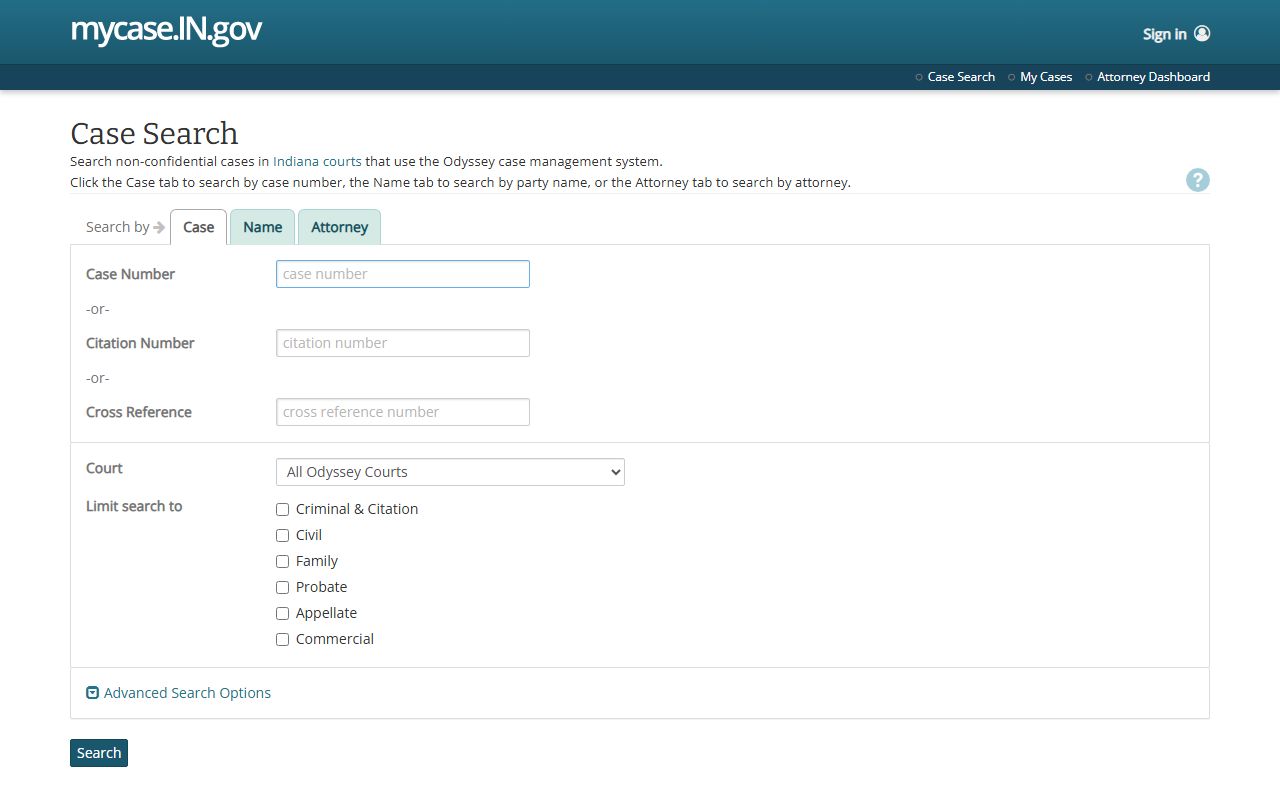
Use the search filters to narrow by party, case number, court, case type, status, or filing date when a common name returns too many results.
- Start with the jail roster profile and record the person's name, booking date, arresting agency, and charge or hold text.
- Search MyCase by party name. If the name is common, narrow by Scott County courts, date of birth if known, and a file-date range near the arrest.
- Look for cases filed in Scott Circuit Court or Scott Superior Court, then open the chronological case summary.
- Compare booking charges with filed counts. Court charges can be added, amended, reduced, dismissed, or combined.
- If the case appears but the complaint, probable-cause filing, or order is not linked online, contact the Scott County Clerk.
Keep custody systems separate from court records after an arrest. The sheriff roster answers whether the person is in Scott County jail custody; MyCase answers whether a court case has been filed; Indiana SAVIN and VINELink handle custody notifications; IDOC, BOP, and ICE use their own locators for sentenced state prison, sentenced federal prison, and immigration custody. The Scott County Sheriff's Office app advertises jail and offender notifications, but it was not verified as a fuller court-record or roster source.
How Charges Get Filed After an Arrest: Complaint, Information, and Indictment
The prosecutor decides what formal charges to file after reviewing the arrest and police materials. The jail roster may show a short hold label such as LOCAL WARRANT, COURT ORDER, WRIT, or SERVING TIME, or it may show an Indiana Code citation. The court record is the filed case, not merely the jail's intake label.
| Complaint | Information | Indictment | |
|---|---|---|---|
| Filed By | Officer or prosecutor depending case practice | Prosecutor | Grand jury |
| Common For | Initial criminal allegations and probable-cause filings | Many Indiana criminal prosecutions | Less common serious felony pathway |
| Starts | The court case or charging process | The formal criminal case | The formal criminal case after grand-jury action |
Charge Status in Court Records After an Arrest
Charge status matters because an arrest allegation is not a conviction. A booking charge can differ from the formal count filed by the prosecutor, and a filed charge can change as the case moves through hearings, plea negotiations, motions, or trial. MyCase may show events before every document is online, so the Clerk is the fallback for copies and current file details.
| Status | What It Means |
|---|---|
| Pending | The charge has been filed and has not reached final disposition. |
| Amended | The prosecutor or court changed the wording, level, citation, or count. |
| Reduced | The charge was lowered to a lesser offense or level. |
| Dismissed | The count was terminated by court or prosecutor action. |
| Conviction | A judgment of guilt was entered by plea, verdict, or other adjudication. |
Bond and Release After an Arrest
Scott County's bond page says bonds are accepted Monday through Friday at the Scott County Clerk's Office from 8:30 a.m. to 4:00 p.m. After hours and on weekends, bond may be paid at the touch-screen kiosk in the Security Center lobby. The sheriff lists kiosk fees of $3.25 for cash and 10% for credit or debit transactions. The roster profile warning says bail amounts may change after court appearances and may not be current, so call the detention center at 812-752-8400 before posting bail.
| Bond Type | How It Works |
|---|---|
| Cash in Full | The full set amount must be paid. |
| Percentage Bond | A stated percentage is paid, such as 10% of the total bond. |
| Corporate Surety | A bail bonding company is used for the bond. |
| Initial-hearing bond | Felonies and other offenses outside the listed misdemeanor schedule have bond set in court. |
| Hold or detainer | A warrant, writ, court order, DOC, federal, or ICE hold can delay release even if another bond is posted. |
Warrants That Lead to an Arrest
The Scott County Sheriff's Office has a warrants link, but the page showed "Warrants Offline For Maintenance" when inspected on June 12, 2026. The sheriff FAQ remains useful because it says the Sheriff's Office maintains arrest warrants issued by the Circuit and Superior Courts. The FAQ says available warrant information can include the warrant date, charges listed on the warrant, bond amount, and issuing court.
When the warrant page is unavailable or stale, call 812-752-8400 or visit the Sheriff's Office at 111 S 1st Street. MyCase can also show court events such as warrant issued, failure to appear, bond order, warrant recalled, or warrant served. Tax warrants are different from arrest warrants and should not be treated as custody warrants.
Charges vs. Convictions
A person can be arrested, booked, and charged without being convicted. The roster and MyCase should be read as public record sources, not as proof of guilt. Disposition language in the court case is the place to look for whether a charge ended in conviction, dismissal, acquittal, or another outcome.
| Charge | Conviction | |
|---|---|---|
| Stage | Accusation or filed count | Judgment after plea, verdict, or adjudication |
| Proof level | May begin from probable cause or charging review | Requires the criminal-case burden before judgment |
| Public record | Often visible unless confidential, sealed, expunged, or restricted | Often visible unless confidential, sealed, expunged, or restricted |
Sealed vs. Expunged Arrest Records
Indiana court access rules and the Access to Public Records Act limit some records. Juvenile records, sealed cases, expunged cases, and confidential materials may not appear in ordinary public MyCase results. Indiana expungement law is found in IC 35-38-9, and IC 35-38-9-1 addresses arrest records when an arrest or charge did not result in conviction or the conviction was vacated.
| Sealed | Expunged | |
|---|---|---|
| Visibility | Restricted from ordinary public access by court rule or order. | Public access can be restricted after the court grants eligible relief. |
| Law enforcement | May retain access under rules or statutory exceptions. | May retain limited access depending the statute and order. |
| Eligibility | Depends on case type, confidentiality rule, and court order. | Depends on IC 35-38-9, disposition, timing, and court order. |
Background Check Considerations
Scott County court records, jail booking records, and Indiana limited criminal history records are not interchangeable. Indiana Code 10-13-3-11 defines limited criminal history separately, including a photograph if available, while MyCase provides public court case information. Employers, landlords, insurers, creditors, and other regulated decision-makers must use lawful FCRA-compliant screening channels rather than casual public-record browsing.
Important: Public court and jail lookups are not consumer reports and should not be used for FCRA-regulated screening decisions.
Restricted Court Records After an Arrest in Scott County
Indiana APRA, court access rules, and MyCase limits mean not every record or document is online. IC 5-14-3-3 provides the general right to inspect and copy public agency records unless an exception applies. IC 5-14-3-4 lists exceptions, including investigatory records and other restricted categories. IC 5-14-3-5 requires certain arrest and jail-log information to be available, but that does not make every investigative narrative, juvenile record, sealed filing, expunged case, or confidential document public.
The Scott County Clerk page is the local source for court-record contact information.
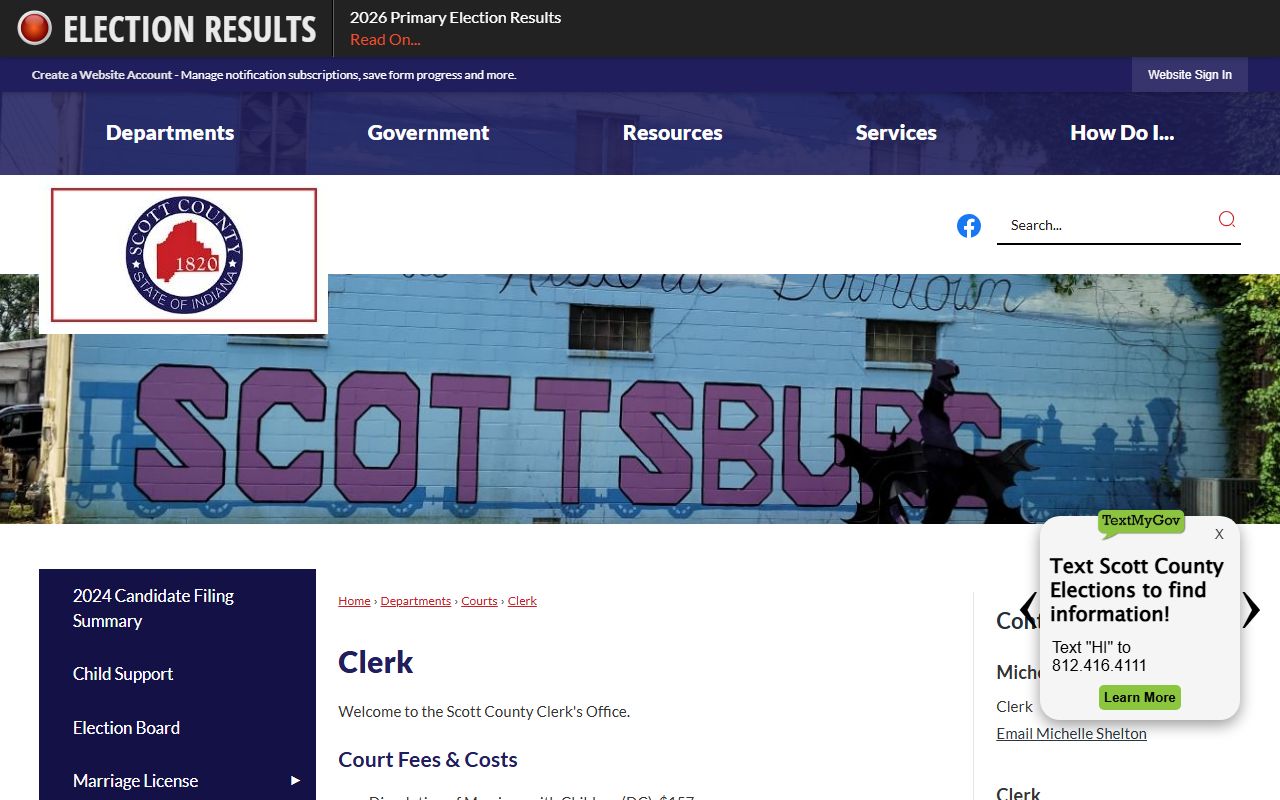
The Clerk's office is the practical fallback when MyCase shows a case but not the document needed for a certified or complete court file.
For records that never become ordinary MyCase entries, use the correct originating office. Sheriff booking records and warrant records route through the Sheriff's Office records process; court-file copies route through the Clerk; prosecutor charging decisions route through the public court case once filed; state prison custody routes through IDOC; federal and immigration custody route through BOP, USMS-related federal channels, or ICE.
Public Record Search
Sponsored Results